

“You don’t need to convince girls that they should go into technology. You need to show them that the possibility exists.”
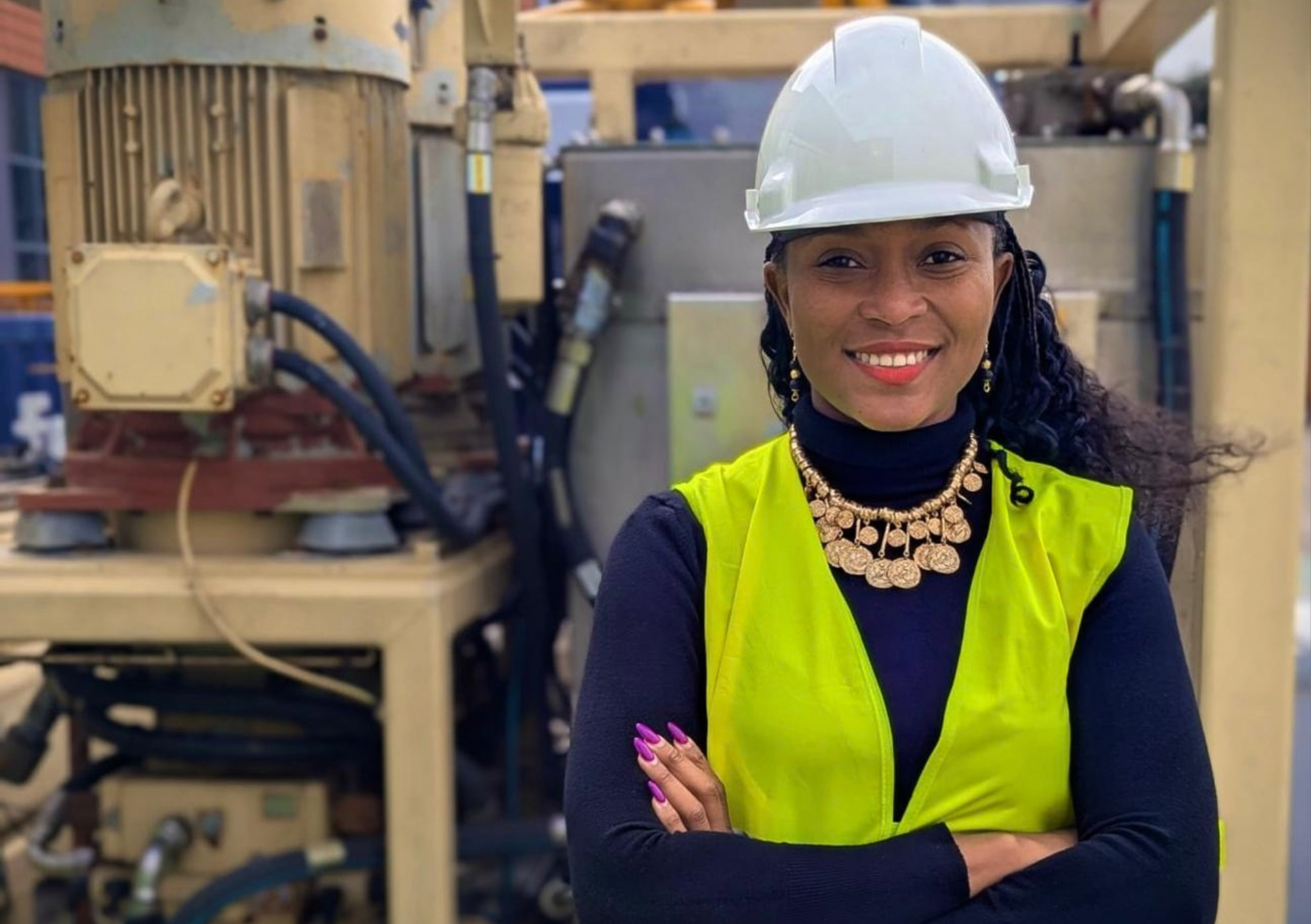
Role Model in the Spotlight – Elizabeth Adelore
Elizabeth Adelore knows better than anyone how important visible role models are. The 32-year-old electrical engineer from Nigeria now works at Fugro in the Netherlands. She works on maritime robots that map the seabed for offshore wind farms and subsea cables, among other things. But her path into technology was anything but self-evident. That’s exactly why she now works as a role model. “You never know who’s watching.”
“Curiosity is all you need.”
As a child, Elizabeth was endlessly curious. She loved watching her father repair printers and wanted to understand exactly how everything worked. “But I kept getting the same answer: ‘That’s not for you. That’s men’s work. Go help your mother in the kitchen.’”
In her environment, curiosity in girls wasn’t encouraged. Still, she didn’t let that stop her. “I always wanted to know how things worked. So I started reading books about science and inventions myself.” But something struck her. “In all those books, every scientist or inventor looked the same: a white man. I never saw anyone who looked like me.” According to Elizabeth, that’s where the problem starts. “It’s not natural that fewer girls choose technology. It’s conditioning.”
Searching for her own future
Around the age of thirteen, Elizabeth first discovered the word engineering. From that moment on, she knew that was the direction she wanted to go. But her family had other plans. Through internet cafés, she secretly searched for study programs and scholarships. Eventually, she found a scholarship from the Polish government. “I applied when I was 18, got accepted, and only then told my parents I was moving to Poland.” That news didn’t land well. “They were incredibly angry and disappointed. At the same time, I was scared myself. I didn’t know what awaited me.”
Alone at the table
In Poland, Elizabeth studied Electrical Engineering. She was the only woman and the only student of color in her class. “That felt incredibly lonely.” She began to doubt herself. “I even tried to come across as more masculine, because I thought I’d never be taken seriously otherwise.” She also noticed the difference during practicals. “When a boy made a mistake, people laughed. When I made a mistake, for some it was proof that women don’t belong in technology.” Because of this, she kept raising the bar for herself. “You end up working two or three times as hard to prove that you do belong.”
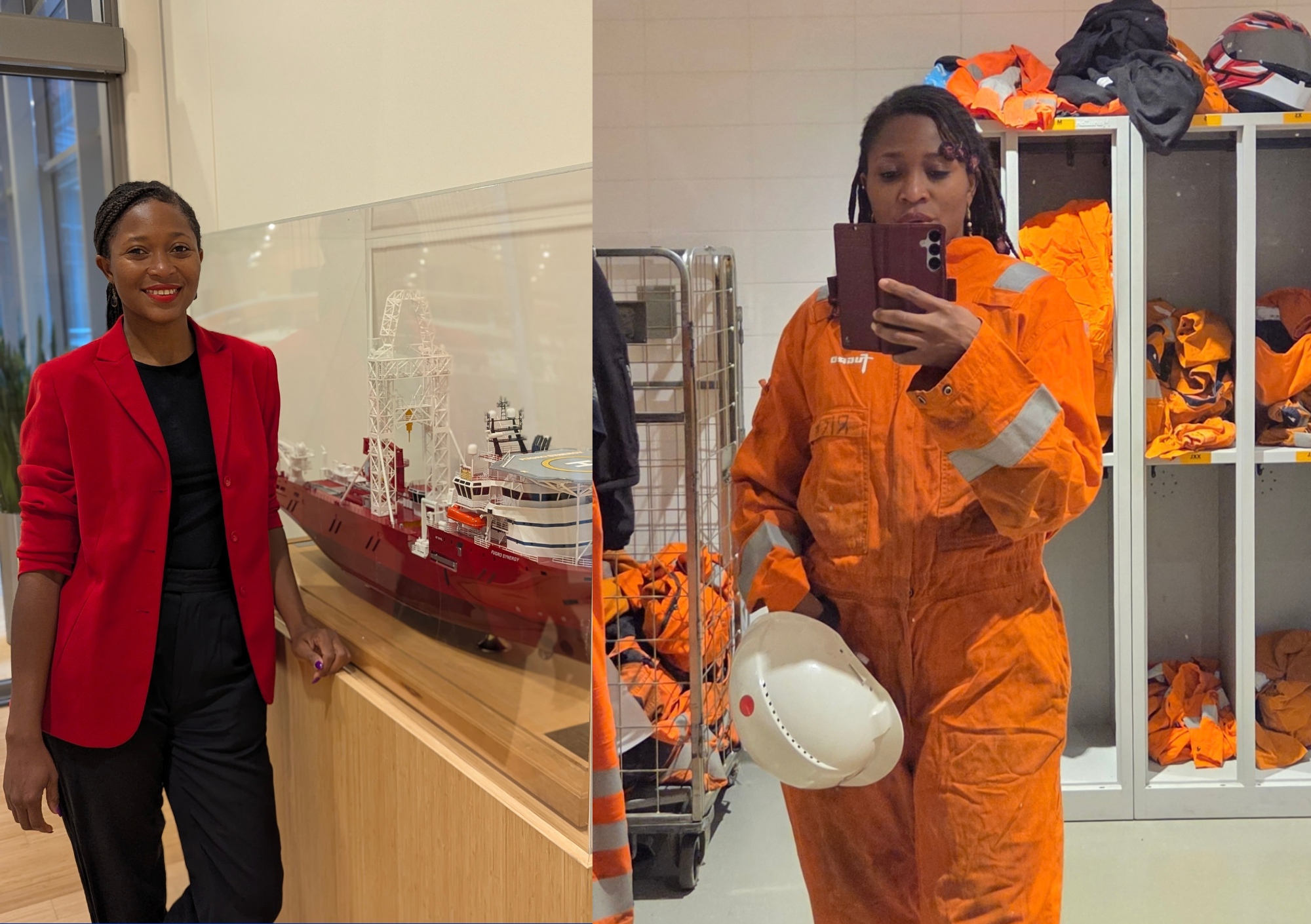
Robots on the seabed
Today, Elizabeth works as an electrical engineer on maritime robots. These robots map the seabed so that, for example, wind farms can be built safely or subsea cables can be inspected. Within a multidisciplinary team, Elizabeth translates functional requirements into technical designs and guides the entire development process: from design and prototype to testing and commissioning. “I make sure that everything actually works in the end.”
Why role models matter so much
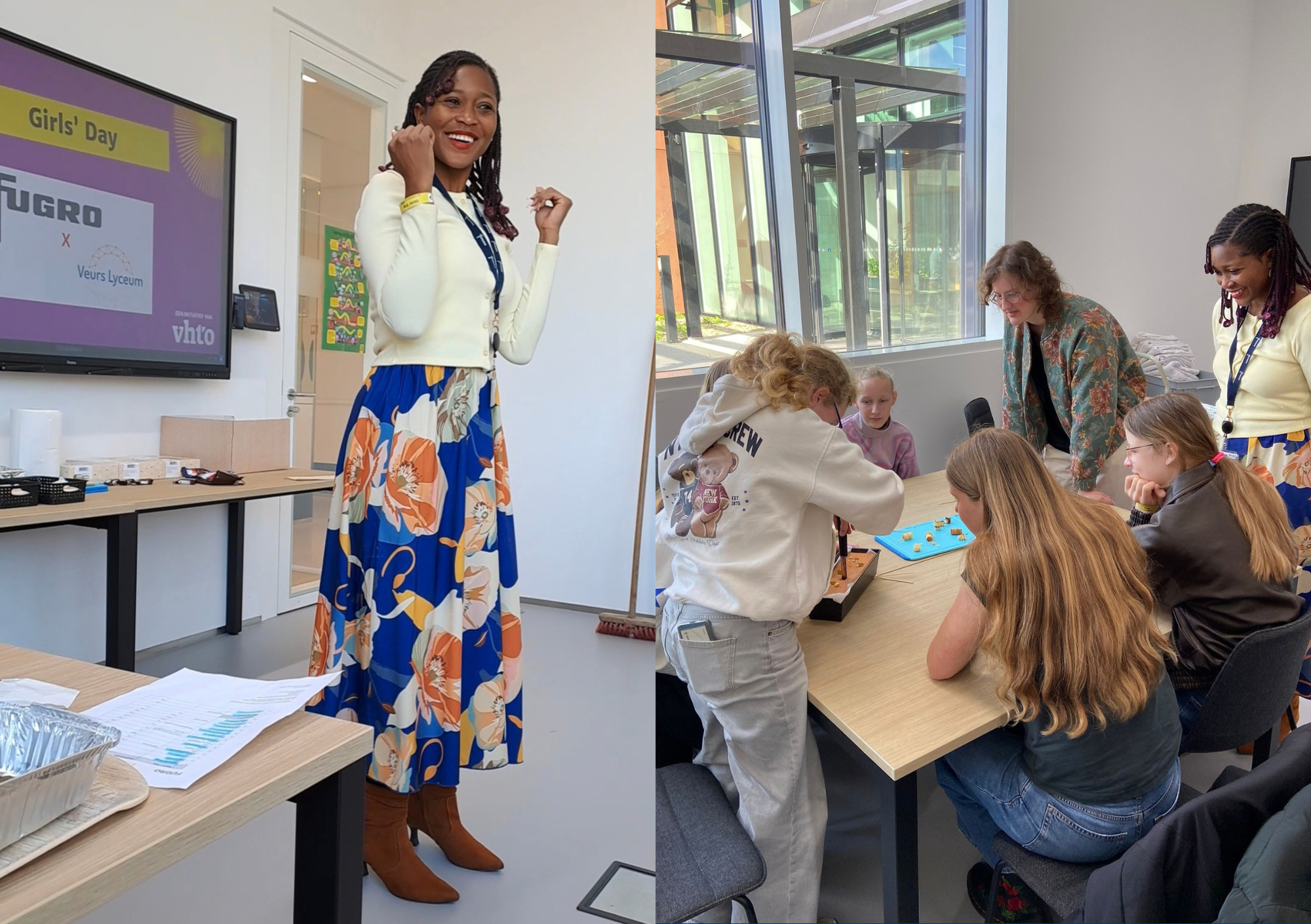
This year, Elizabeth organized Girls’ Day within her organization for the first time. The experience made a deep impression on her. “When I read the evaluations, I saw how many girls suddenly thought afterwards: maybe I could work in technology too one day. That brought tears to my eyes.”
According to Elizabeth, that’s exactly why initiatives like Girls’ Day are so important. “You don’t need to convince girls that they should go into technology. You need to show them that the possibility exists.” During Girls’ Day, the students met female geologists, engineers, the CFO, and other professionals. “They saw that there isn’t just one type of job in technology. You can stay true to yourself and still work in this sector.”
“You can only dream of a future once you can see that it exists.”
Prejudice still exists
Despite her experience, Elizabeth still regularly encounters stereotypes. “I’m often the only woman and the only person of color at the table.” Sometimes the reactions are subtle. “Sometimes it’s jokes or microaggressions.” But sometimes they’re very direct. “Once I was in the United States for work. A technician looked at me and said: ‘We asked for an engineer. Where is he?’”
Her profession has also been questioned at an airport. “When I said I was an engineer, someone started laughing and asked: ‘No, but what do you really do?’” According to Elizabeth, experiences like these show just how much visible role models are still needed.
Technology for everyone
According to Elizabeth, diversity isn’t just about equal opportunity. It’s also about better technology. “If only one group of people is at the table, you only design for that group.” She compares it to medication that’s only tested on men. “Then you run the risk that it works less well for women. The same goes for technology. You need everyone at the table.”
“You never know who you’re inspiring”
For Elizabeth, that’s the most important reason to be visible. “You never know who’s watching.” That’s why she continues to commit herself as a role model. “When girls see someone who looks like them, something changes. A future that once seemed impossible suddenly becomes imaginable.” “You can only dream of a future once you can see that it exists.”
Become a role model and inspire the next generation
At VHTO, we believe technology and IT are for everyone. Yet in the Netherlands, relatively few girls still choose to study or build a career in these fields. One of the main reasons? A lack of visible female role models. We want to change that. And that’s where you come in.
Lees verder
Kennis
Onderzoek
Docenten
STO
Meer meiden in STO: wat doen regio’s en wat werkt?
Rapportage en inspiratiekaart over goede voorbeelden uit de STO regio’s.
Nieuws
Docenten
Werkgevers
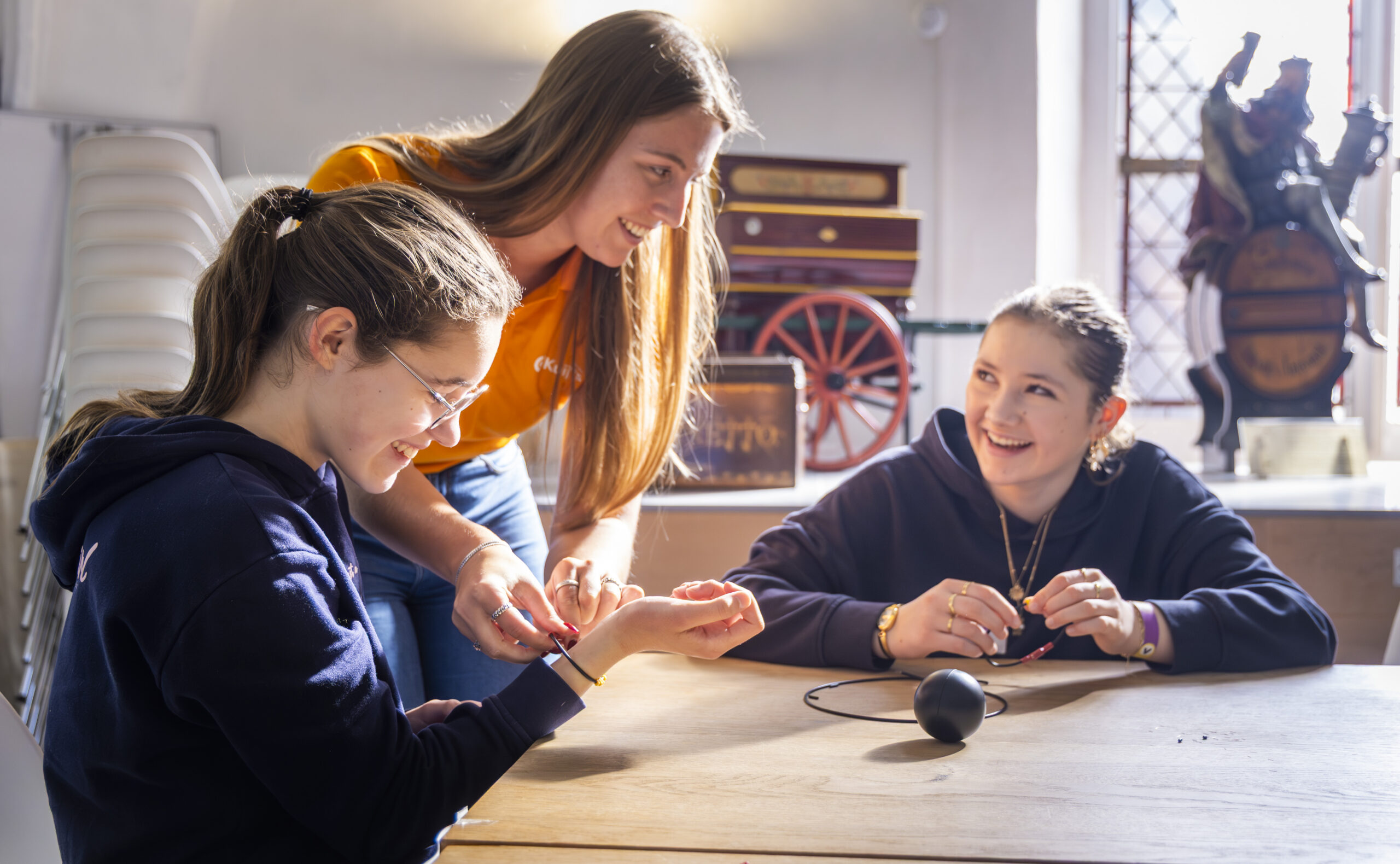
Aanmelden voor Girls’ Day 2027 is geopend, met een nieuw aanmeldsysteem
Op dinsdag 13 april 2027 gaan duizenden meiden van 10 tot 15 jaar op bezoek bij technische bedrijven in hun buurt. Scholen en bedrijven kunnen zich vanaf nu aanmelden. Nieuw
Aanbod
Event
Bedrijven
Docenten
po
vo
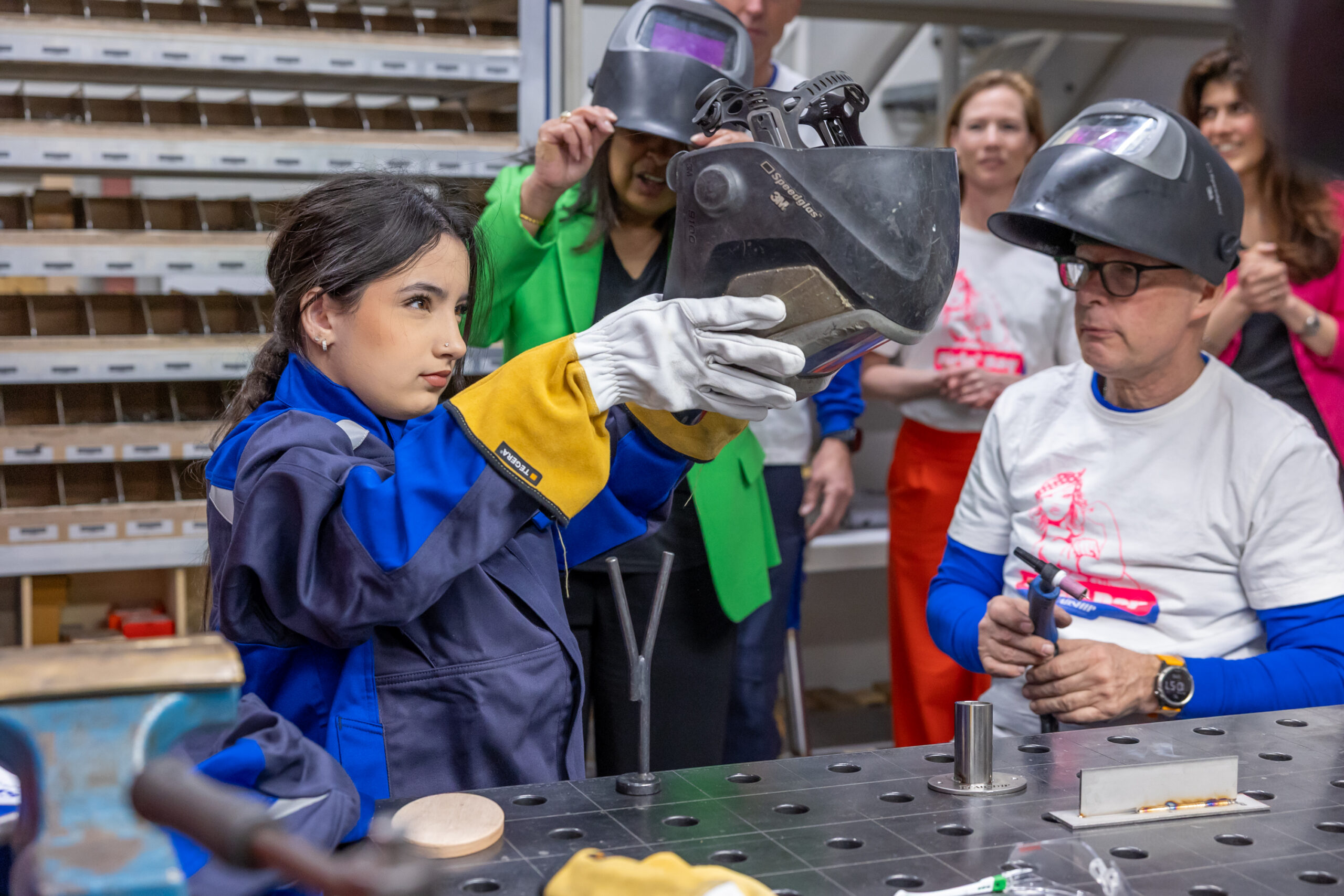
Girls’ Day 2027
Tijdens Girls’ Day openen technische bedrijven hun deuren om meiden van 10 tot 15 jaar kennis te laten maken met techniek en IT.
Verhaal
Interview
Bedrijven
Docenten
Pers
Rolmodellen
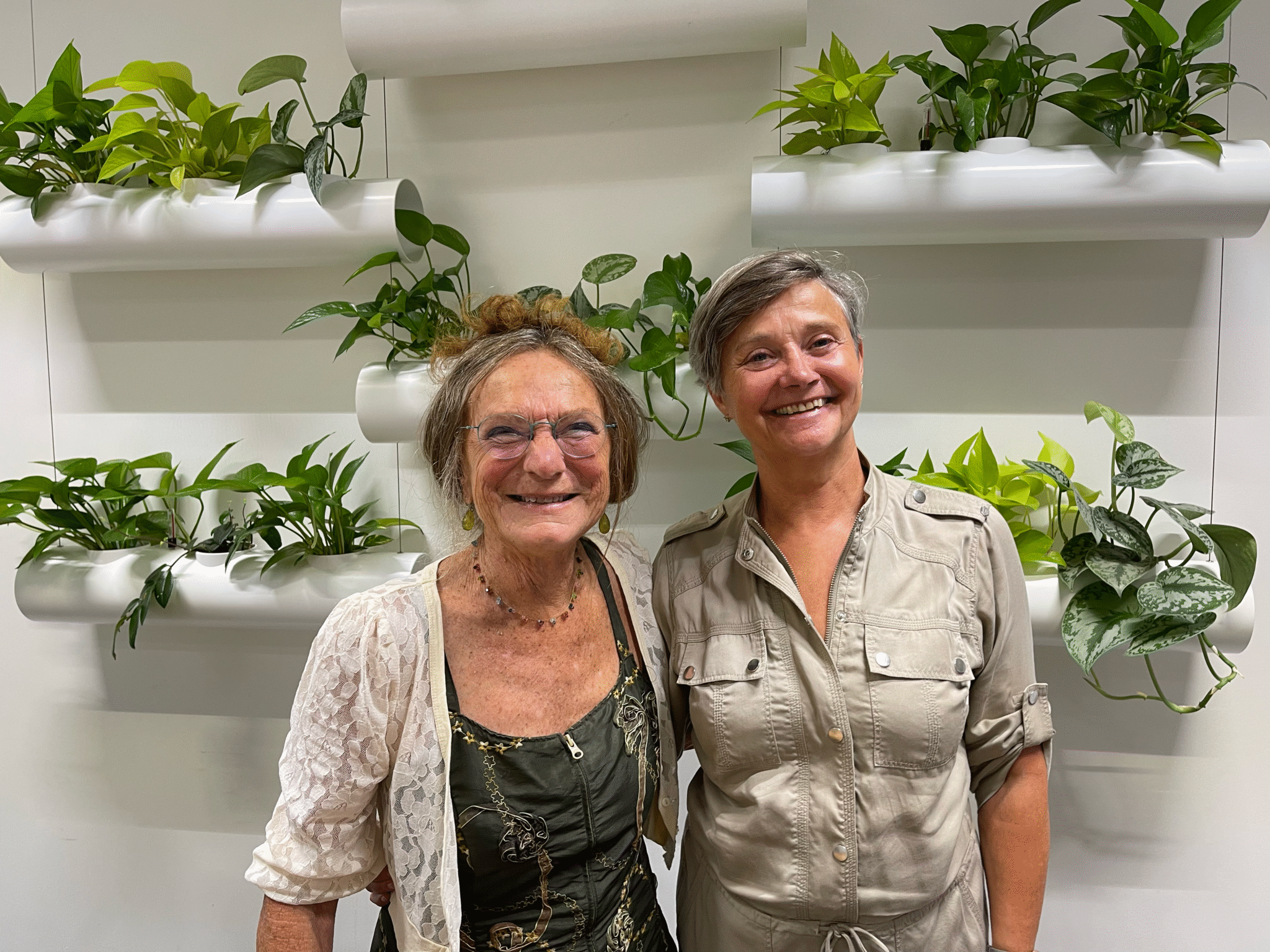
“We wilden laten zien: meiden horen óók in de techniek”
Kennis
Publicatie
decanen
Docenten
mentoren
mbo/hbo/wo
po
vo
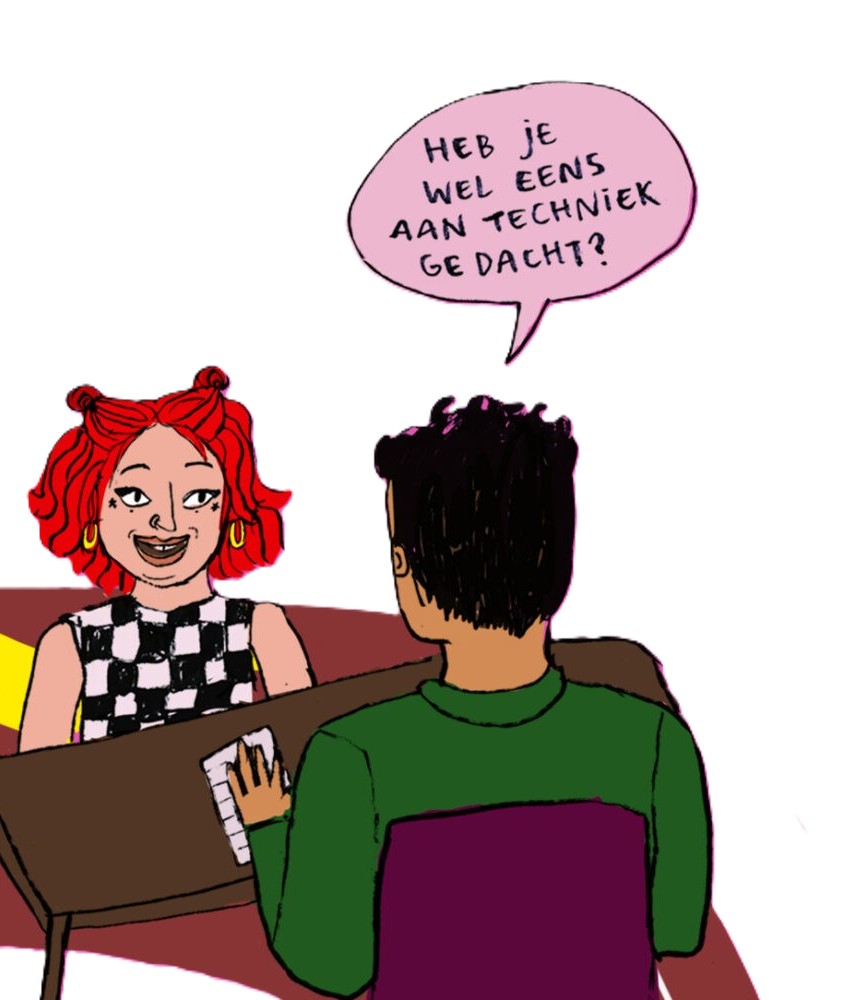
Kiezen zonder hokjes
Download de publicatie en lees meer over deze principes en hoe jij hiermee aan de slag kunt in LOB.

Nieuws
artikel
Docenten
Ouders
po
vo
Boekentips over techniek voor de Kinderboekenweek
Kinderen vormen hun beeld van wie waar “thuishoort” al vroeg, vaak via de verhalen die ze lezen. Als een meid in een boek nooit een vrouw tegenkomt die iets bouwt, ontwerpt of uitvindt, leert ze onbewust: dit is niet voor mij.
Verhaal
Interview
Docenten
Rolmodellen
po
vo
Rolmodel in de spotlight – Elizabeth Adelore
In de nieuwste editie van Rolmodel in de Spotlight vertelt Elizabeth openhartig over haar weg naar de techniek, de vooroordelen die ze onderweg tegenkwam en waarom zichtbare rolmodellen zoveel verschil kunnen maken.

Nieuws
Event
Training
Workshop
Docenten
STO
po
vo
Nieuw aanbod: workshop over self-efficacy in techniek
De nieuwe workshop “Ik kan dit! – Met vertrouwen leren in techniek” laat zien hoe docenten het vertrouwen in eigen kunnen van leerlingen kunnen versterken in techniek en technologie.